- Open 24/7, Monday to Sunday
- Serving Floyd County
Floyd placement details
River crossings and older streets affect container placement
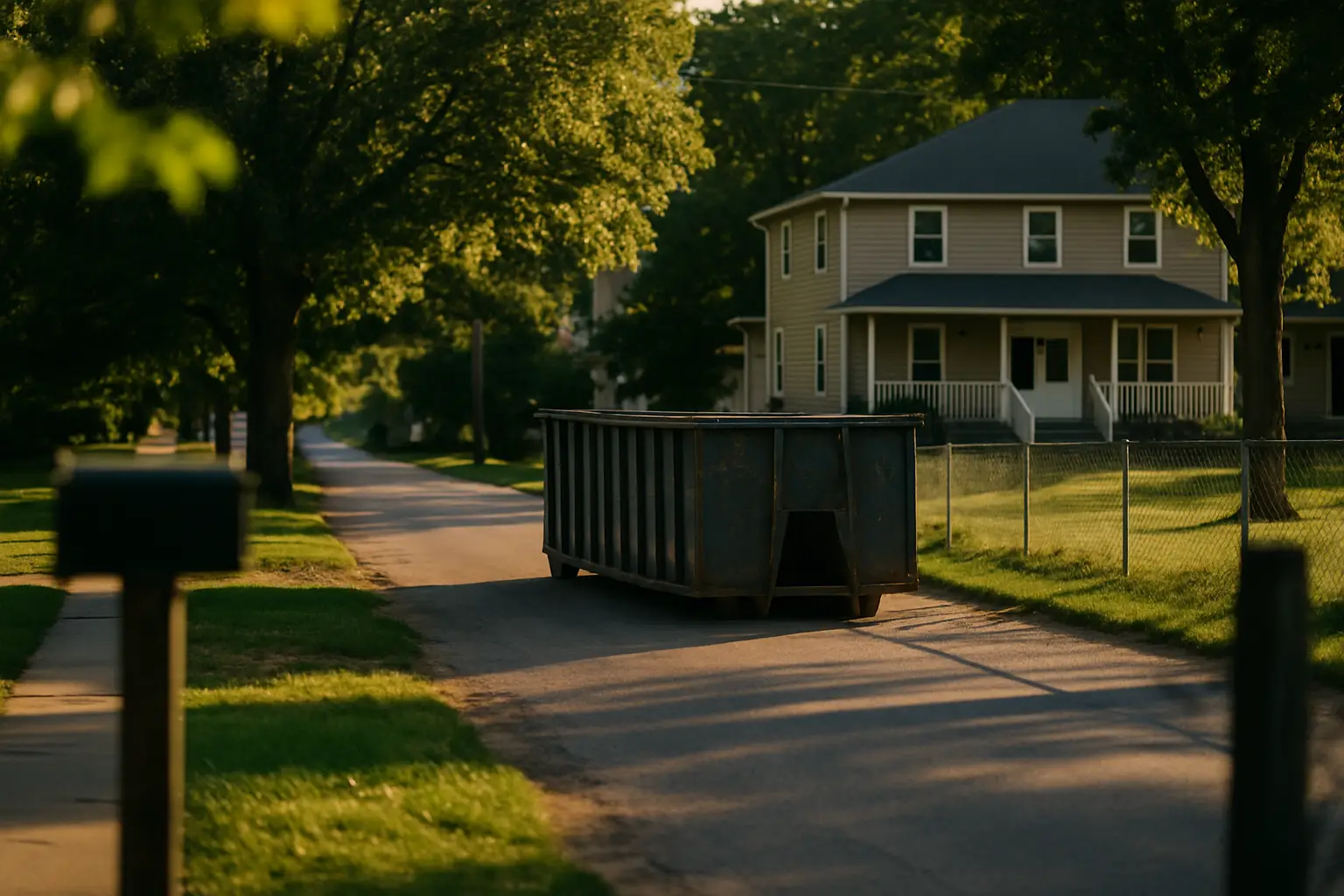
Floyd’s small-town residential streets can look straightforward until a driveway narrows near a river crossing or a property has limited room between the house, sidewalk, and road. We look at where the truck can approach, whether branches or parked vehicles interfere, and whether the container can sit on private ground without blocking drainage. A placement that works on a newer open lot may not work beside an older Floyd home. Clear access matters more than simply choosing the largest container available.
Older homes around Floyd often have compact driveways, detached garages, additions, and sheds that divide the usable space. That changes how debris gets loaded and how much room workers need to open doors or carry material. A smaller container can be the better choice if the driveway is tight, while a larger unit may reduce overflow on a broad lot. We discuss the material first, especially roofing, concrete, plaster, and wet household debris, because volume alone does not determine a safe load.
Weather also changes the practical plan. Wet springs can soften unpaved approaches, and freeze and thaw cycles can leave ruts or weak edges near driveways. Summer storms may drop branches across an access route before delivery. Tell us whether the container will sit on pavement, gravel, or soil, and whether a truck must cross a narrow approach. We can then explain the placement and loading conditions before the scheduled delivery rather than finding a problem at the curb.
Material and weight
Floyd houses can make a full container heavier than expected
Many Floyd homes include older plaster, lath, hardwood flooring, brick, cabinets, and layers of previous repairs. Those materials take less space than loose household contents but add weight quickly. A bathroom tear-out may look modest while containing dense tile, mortar, drywall, and fixtures. The same applies to porch repairs and roofing work, where shingles stack tightly and become heavy as they accumulate. We ask what is being removed, not just how many rooms are involved, then match the container to the material and the driveway conditions. If the job is mostly heavy debris, filling a large container to the top may not be appropriate.
Housing layout matters too. An older Floyd property may have a narrow side drive, detached garage, basement stairs, or a fence that makes hand loading slower. Newer or more open lots may allow a larger container and easier access, but that does not automatically make the largest size economical. Keep doors, utility access, and neighboring driveways open. If the project includes concrete, soil, brick, or wet material, describe it before delivery. That lets us explain load limits and placement instead of treating every renovation as ordinary household debris.
Floyd project options
Common dumpster jobs around Floyd homes and properties
These six options cover the work we most often plan around Floyd’s older housing, compact lots, rural edges, and small commercial streets. The material and access determine the container choice.
Household Cleanout Dumpsters
For Floyd homes with packed rooms, basement items, or garage buildup, we plan around narrow driveways and keep walking paths clear during loading.
Home cleanoutsMoving and Estate Cleanup
Moving and estate work in Floyd can combine furniture, boxes, appliances, and household materials. We help separate heavy items from bulky lighter debris before delivery.
Move preparationHome Remodeling Dumpsters
Bathroom, kitchen, and flooring projects in older Floyd houses may produce dense plaster, cabinets, trim, and mixed debris that needs more capacity than the pile suggests.
Remodel debrisRoofing Debris Dumpsters
Roof replacement near Floyd requires a stable placement close enough for loading but clear of low branches, vehicles, and the access path used by the crew.
Roofing workYard Waste Dumpsters
Storm cleanup and seasonal yard work around Floyd can create branches, brush, and soil-heavy material. Keep loads separated and ask about accepted contents first.
Yard projectsConcrete and Heavy Debris
Concrete, masonry, and dense demolition material from Floyd properties can exceed a container’s practical weight before it looks full. Choose capacity for weight, not appearance.
Heavy material
Floyd dumpster questions
Answers for container service around Floyd
What size dumpster should I rent for a Floyd home cleanout?
For a Floyd home cleanout, size depends on the amount and weight of furniture, boxes, appliances, plaster, and other material. A garage or light household cleanout may fit a smaller container, while an estate cleanup or full-house project usually needs more room. Older homes can add dense plaster and flooring. Keep the driveway clear and describe the rooms, materials, and access before choosing.
Can a dumpster be placed on a Floyd residential street?
A dumpster on a Floyd residential street may require local permission, and placement can be restricted near crossings, sidewalks, drainage areas, or traffic lanes. Private driveways are usually simpler when the surface and approach can support the truck. Tell us whether the container must sit on private property or public pavement, then identify nearby signs, hydrants, and parked vehicles before scheduling.
How does Floyd weather affect dumpster delivery?
Floyd weather can affect delivery when spring ground is soft, freeze and thaw damages driveway edges, or summer storms block an approach with branches. Pavement generally provides firmer support than soil or gravel, but every property is different. Tell us the planned surface and any recent rain or freeze damage, and remove obstacles from the truck path before delivery.
Can I use a dumpster for roofing debris in Floyd?
Yes, roofing debris from a Floyd project can be placed in a dumpster when the load is prepared and material rules are followed. Shingles are compact and heavy, so the container may reach a practical weight limit before it looks full. Keep bundles and loose debris controlled, protect the driveway, and tell us whether the roof includes tear-off layers, wood, flashing, or other dense material.
How do I prepare a narrow Floyd driveway for delivery?
Prepare a narrow Floyd driveway by removing vehicles, trailers, branches, bins, and anything that reduces the truck’s approach or placement space. Check the route from the street to the intended location, including fences, overhead limbs, soft edges, and nearby structures. Leave the loading area open, photograph difficult access if useful, and explain the driveway surface before delivery is arranged.
Before delivery
Prepare the Floyd property before the truck arrives
- Clear Floyd driveway access of vehicles, trailers, branches, and loose items before delivery.
- Mark private placement boundaries so the container stays clear of sidewalks, hydrants, and neighboring driveways.
- Tell us if wet soil, gravel, freeze damage, or a narrow river crossing affects truck access.
- Separate concrete, soil, roofing, household debris, and yard waste before loading the Floyd container.
- Keep the loading area open so doors, basement stairs, and older detached garages remain reachable.

Plan the container around your Floyd property
Have the Floyd address, material list, driveway surface, and preferred placement ready. We can discuss the practical container size, access concerns, and pickup coordination for your project.
Click Here to Call(319) 410-9632Serving Floyd properties
Container delivery follows Floyd’s streets and rural edges
Juliann Dumpster Rental serves residential streets, older homes, newer lots, farms, and small commercial properties throughout Floyd. Trucks come from Charles City, and placement is planned around driveway width, river crossings, pavement, gravel, and seasonal ground conditions. Tell us the property location, material, and preferred placement so the delivery plan fits the site.